
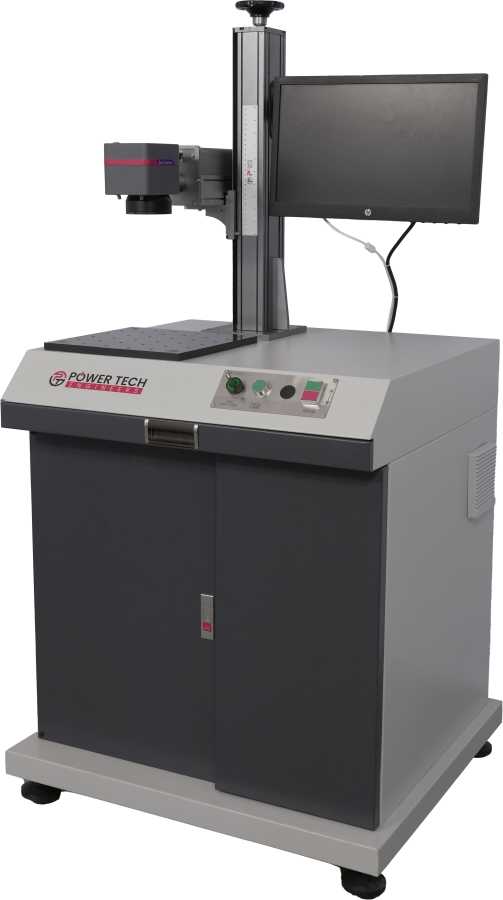
Laser Marking is a non-contact process widely employed in various industries. Utilizing a laser beam, it precisely marks or engraves surfaces with notable advantages of permanence and speed. Unlike traditional methods, Laser Marking doesn't require tool bits or consumables, making it a clean and efficient technology. Types of Laser Marking ● Engraving - Material removal creates a visible mark on the surface. ● Annealing - Laser-induced heat causes oxidation beneath the surface which results in a color change without material removal, providing a durable mark. ● Foaming - Certain materials foam and create a raised mark when the laser heats and vaporizes the surface which produces a distinctive raised mark on specific materials. ● Coloration - Some materials undergo a color change when exposed to the laser resulting in a color change on the material's surface without material removal. Materials Suitable for Laser Marking ● Commonly Marked Metals - Steel, aluminum, brass, mild steel, titanium and widely used for precise marking on various metal surfaces. ● Markable Plastic Types - PPE, PET, UPVC, CPVC, HDPE, ABS. Advantages of Laser Marking System ● High Precision - Enables intricate and precise designs with accuracy. ● Non-contact Process - Eliminates tool wear and contamination, ensuring a clean marking process. ● Durability and Resistance - Laser marks are inherently durable and resistant to wear, constituting a permanent marking process. ● Speed for High-volume Production - Fast processing makes laser marking well-suited for high-volume production environments. Applications ● Product Identification - Commonly employed for part numbering, serial numbers, and barcode marking. ● Branding and Logo Marking - Companies utilize laser marking to add logos or brand names to their products. ● Medical Device Marking - Essential for marking medical instruments and devices with crucial information. ● Automotive Components - Marking parts for traceability and quality control in the automotive industry.
Address
Shreenathji Industrial Area Phase 2, Survey No 472/480, Plot No.8 Lodhika, Dist, Khambha, Gujarat 360311
Rajkot, India, 360004