Rajkot
08048069308
+918799375195

Items tagged with 'manufacturing process'

6814772a5d263414004dd4a4 Card 2

product image
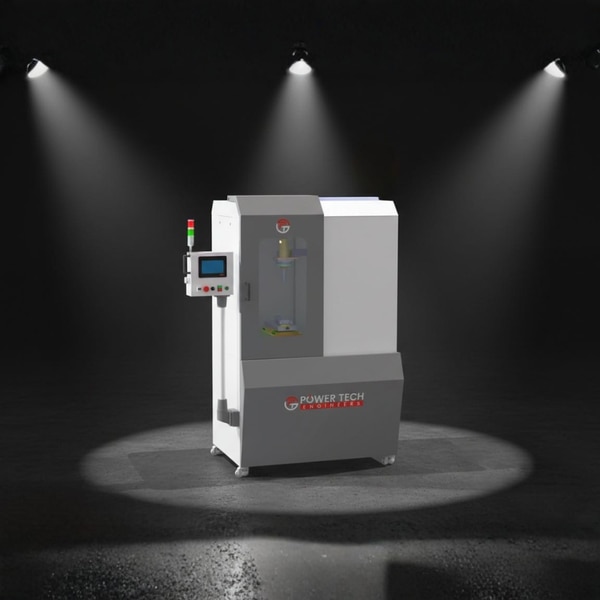
Fiber Laser Scribing Machine

Laser Scribing of Connecting Rods is a precision machining process that involves the use of a laser beam to make fine cuts or marks on the big end bore of Connecting Rod. Connecting Rods are crucial components in internal combustion engines, and Laser Scribing is employed for various purposes in their manufacturing and assembly. Here's how Laser Scribing of Connecting Rods is typically carried out: 1. Material Preparation: Connecting Rods, typically made of steel or aluminum, are prepared and positioned. 2. Laser Generation: A Laser Cutting Machine with a suitable Laser Source is employed, selected based on the Connecting Rod Material. 3. Fixturing: Connecting Rods are securely fixed in a precision fixture for stability during Laser Scribing. 4. Program Design: A CNC system is used to program the desired scribing pattern into the Laser Cutting Machine. 5. Laser Scribing: The Laser beam is directed onto the Connecting Rod's surface, creating fine cuts or marks with controlled depth and width. 6. Quality Control: Post-scribing, quality checks are conducted to ensure the marks meet specified tolerances and standards. Purpose of Scribing: Laser Scribing is utilized in connecting rods to create weakened grooves for precision cutting. This involves making controlled marks on the rod's surface, serving as predetermined lines for subsequent cutting. This technique ensures accurate and controlled cuts, contributing to efficient production and structural integrity. Advantages: - Precision: Laser scribing provides high precision, allowing for intricate markings with minimal material removal. - Speed: The process is generally fast and efficient.- - Non-Contact: Laser scribing is a non-contact process, minimizing the risk of damage to the connecting rod.
6814772a5d263414004dd4a4 Card 2

product image
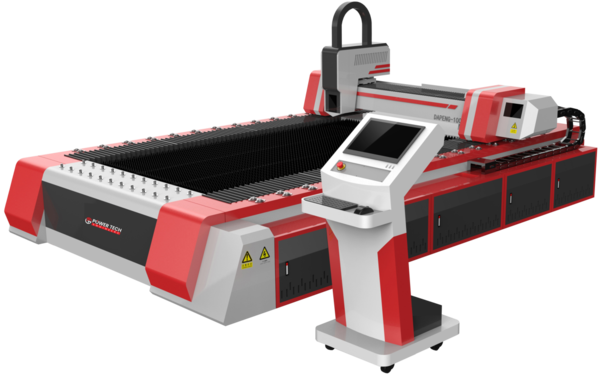
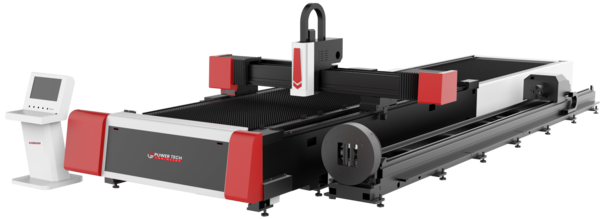
Fiber Laser Cutting Machine

Introducing Powertech Engineers Rajkot's cutting-edge fiber laser cutting machine with rotary pipe cutting capabilities. Our innovative technology allows for precise and efficient cutting of various materials, making it an essential tool for any manufacturing process. As the leading fiber laser marking machine manufacturer in Rajkot, we guarantee superior quality and reliability. Upgrade your production line with Powertech Engineers Rajkot's Fiber Laser Cutting With Rotary Pipe Cutting machine today!

6814772a5d263414004dd4a4 Card 2

product image
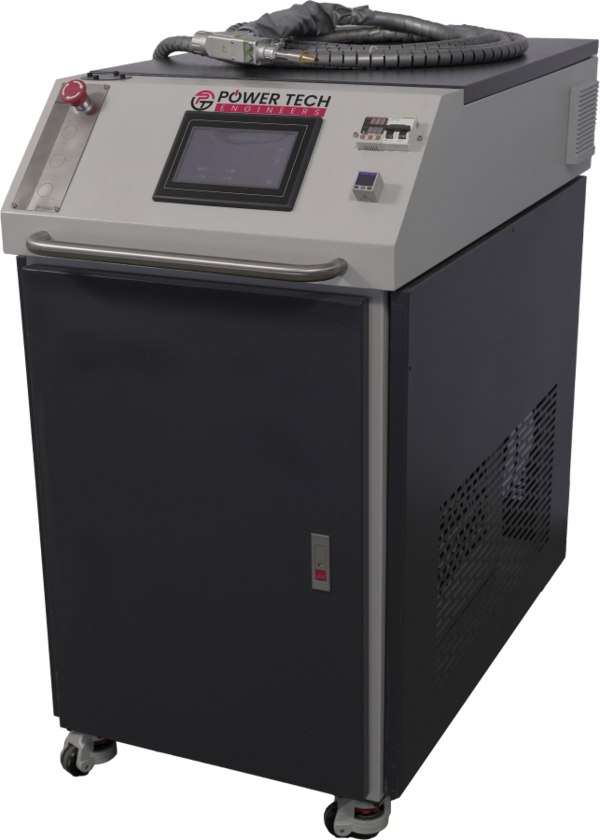
Laser Welding Machine

Laser welding, or Laser Beam Welding (LBW), employs a focused laser beam for melting and fusing metal components. This process allows for high-speed welding of thin materials and produces narrow, deep welds for thicker materials, ensuring precision in joining metal parts. LBW is a versatile fusion welding method applicable to various materials, including carbon steels, HSLA steels, stainless steel, aluminum, and titanium. While it excels in high-quality welds, special attention is needed for high-carbon steels due to potential cracking from rapid cooling. The use of high-power gas lasers, particularly suitable for high-volume applications, makes LBW a prevalent choice in the automotive industry. In fiber lasers, the main medium is the optical fiber itself. They are capable of power up to 50 kW and are increasingly being used for robotic industrial welding. Laser Welding has many advantages over traditional welding methods 1. Precision and Control - Laser welding offers precise control over heat input and weld placement. 2. Efficiency - Rapid heating and cooling process reduces overall cycle time. 3. Strength and Versatility - High temperatures achieved by lasers result in strong and durable welds, suitable for a wide range of materials and thicknesses. 4. Adaptability and Automation - The process is easily automated and compatible with robotic machinery. 5. Safety - Unlike some methods, laser welding doesn't generate x-rays. 6. Clean and Precise - Lower porosity, less spatter, and low thermal impact contribute to clean and precise welds. 7. Deep and Narrow Welds - Laser welding can achieve deep and narrow welds. 8. Electrode-Free - The process doesn't require an electrode.

6814772a5d263414004dd4a4 Card 2

product image
Fiber Laser Cutting Machine

Laser Cutting utilizes a high-power laser to vaporize materials, creating precise cuts. The process involves directing a laser beam via optics and CNC technology to follow a predetermined pattern, melting or vaporizing the material. Automation, controlled by CAD/CAM systems, is common, offering accuracy, edge squareness and heat input control means surpassing traditional cutting methods like plasma and oxy-fuel. The focused laser beam is directed at the material, which then either melts, burns, vaporizes away, or is blown away by a jet of gas, leaving an edge with a high-quality surface finish. Advantages of Laser Cutting 1. Precision - Laser cutting enables extremely precise cuts, even in intricate patterns. 2. Speed - Often faster than traditional methods, leading to increased efficiency. 3. Energy Efficiency - Reduced energy consumption results in lower bills and greater overall efficiency. 4. Productivity - Higher productivity with lower operational costs offers a superior Return on Investment (ROI). 5. Material Versatility - Capable of cutting a variety of materials, including highly reflective ones like copper and brass. 6. Contamination Control - As the cutting is contactless, there is minimal contamination of the material. 7. Reduced Warping - Laser systems have a small heat-affected zone, reducing the chance of material warping during cutting. 8. Metal Cutting Precision - In metal cutting, laser cutting is more precise and energy-efficient compared to plasma cutting, especially for sheet metal. Laser cutting is a versatile and efficient technology that has found widespread use across various industries due to its accuracy and speed.

6814772a5d263414004dd4a4 Card 2

product image
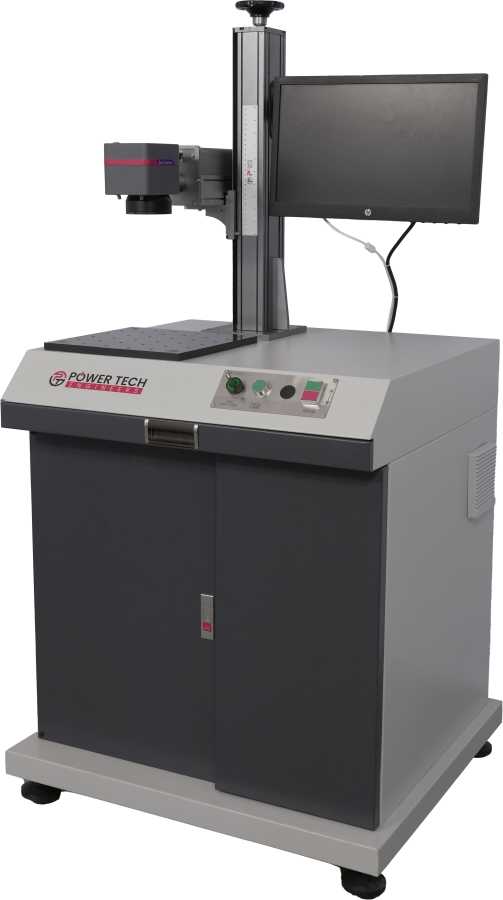
Laser Machine

Laser Marking is a non-contact process widely employed in various industries. Utilizing a laser beam, it precisely marks or engraves surfaces with notable advantages of permanence and speed. Unlike traditional methods, Laser Marking doesn't require tool bits or consumables, making it a clean and efficient technology. Types of Laser Marking ● Engraving - Material removal creates a visible mark on the surface. ● Annealing - Laser-induced heat causes oxidation beneath the surface which results in a color change without material removal, providing a durable mark. ● Foaming - Certain materials foam and create a raised mark when the laser heats and vaporizes the surface which produces a distinctive raised mark on specific materials. ● Coloration - Some materials undergo a color change when exposed to the laser resulting in a color change on the material's surface without material removal. Materials Suitable for Laser Marking ● Commonly Marked Metals - Steel, aluminum, brass, mild steel, titanium and widely used for precise marking on various metal surfaces. ● Markable Plastic Types - PPE, PET, UPVC, CPVC, HDPE, ABS. Advantages of Laser Marking System ● High Precision - Enables intricate and precise designs with accuracy. ● Non-contact Process - Eliminates tool wear and contamination, ensuring a clean marking process. ● Durability and Resistance - Laser marks are inherently durable and resistant to wear, constituting a permanent marking process. ● Speed for High-volume Production - Fast processing makes laser marking well-suited for high-volume production environments. Applications ● Product Identification - Commonly employed for part numbering, serial numbers, and barcode marking. ● Branding and Logo Marking - Companies utilize laser marking to add logos or brand names to their products. ● Medical Device Marking - Essential for marking medical instruments and devices with crucial information. ● Automotive Components - Marking parts for traceability and quality control in the automotive industry.

Still searching for
manufacturing process?